
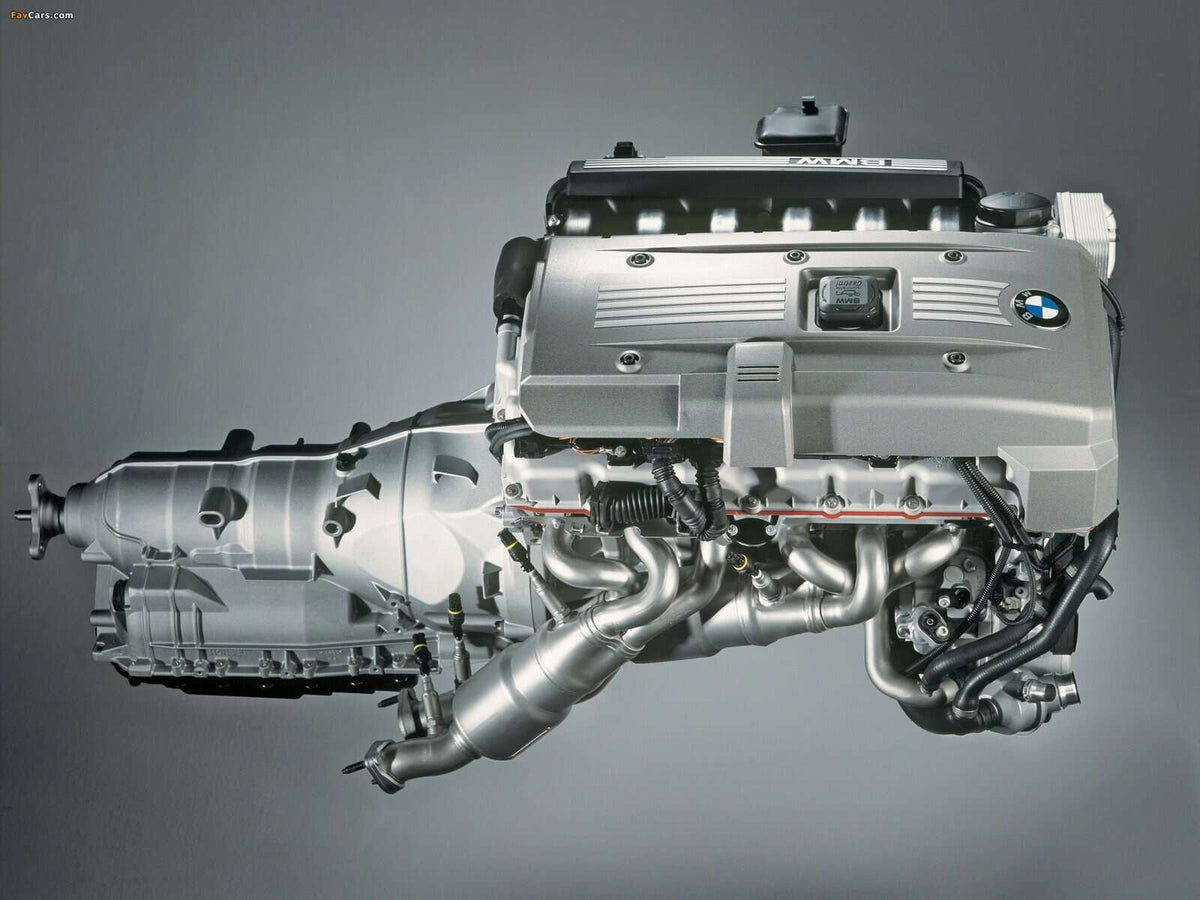
The BMW N52 is one of the most durable engines BMW built in the 2000s, but almost every high-mileage example will see the same handful of failures: oil leaks from the valve cover and oil filter housing gaskets, a failing electric water pump and thermostat, broken DISA valve flaps, cracked intake boots, and noisy hydraulic lifters. None of them are death sentences. Catch them early and the N52 will happily run past 200,000 miles.
The N52 (and its SULEV-emissions sibling, the N51) powers the 2006–2013 BMW 325i, 328i and 330i (E90/E91/E92/E93), the 128i (E82/E88), the 528i (E60), the X3, X5, Z4 and more. It's a naturally aspirated 3.0L inline-six with a magnesium-aluminum block, Valvetronic variable valve lift and double VANOS. It's smooth, it revs to 7,000 rpm, and it's been called the last great naturally aspirated BMW inline-six for good reason. (We wrote a whole feature on why the N52 matters.)
We've owned, built, tuned and supercharged a lot of these engines. This guide covers the problems we see over and over, how to spot them, what they cost to fix, and which parts actually solve them for good.
1. Valve cover and oil filter housing gasket leaks
If your N52 is over about 80,000 miles and you smell burning oil after a drive, start here. The two most common oil leaks on the N52 are the valve cover gasket (oil weeps down onto the exhaust manifold) and the oil filter housing gasket, often called the OFHG (oil runs down the front of the engine).
Symptoms
- Burning oil smell or light smoke from the engine bay, especially at stoplights
- Oil residue on the exhaust manifold, the top of the block or the front of the engine
- Slowly dropping oil level between changes
Why it matters more than you think
An oil filter housing leak doesn't just make a mess. Oil soaks the accessory belt, the belt degrades, and on N5x engines a shredded belt can get pulled behind the crank pulley and into the front crankshaft seal. When that happens the seal gets pushed out, the engine dumps its oil, and you can lose the engine in seconds. It's one of the few N52 failures that can be catastrophic.
Fix it once: replace leaking gaskets as soon as you see them, replace an oil-soaked belt, and install a crank seal guard so a failed belt can never reach the seal.
On the N52 the crankcase ventilation (CCV/PCV) valve is built into the valve cover. If you hear a whistle at idle, see excessive oil consumption or get lean codes, the CCV diaphragm may be torn, and the usual fix is a new valve cover with gasket. Do both jobs at once.
2. Electric water pump and thermostat failure
The N52 uses an electric water pump and an electronically controlled thermostat instead of a belt-driven pump. They work well until they don't, and failure is common somewhere between 60,000 and 100,000 miles. Many owners replace both together as preventive maintenance.
Symptoms
- Coolant temperature warning on the dash, often with reduced power
- Radiator fan running at full speed right after startup or after shutdown
- Fault codes for the coolant pump or thermostat
- Temperature gauge (or coded coolant temperature readout) climbing in traffic
Don't keep driving an overheating N52. The magnesium-aluminum block doesn't tolerate overheating the way an iron block does, and warped heads or stripped head-bolt threads are expensive.
While you're in the cooling system
Two small plastic parts fail constantly and are worth upgrading whenever the system is open. The expansion tank bleed screw is plastic and snaps or strips, and the plastic coolant flange at the rear of the cylinder head (the "Mickey Mouse" flange) cracks and leaks with age.
Always bleed the cooling system with the ignition on and the bleed procedure running. Trapped air is the number one reason new water pumps "fail" right after install.
3. DISA valve failure
The N52 intake manifold uses DISA valves (differential air intake), flaps that change the effective intake length to fill in torque across the rev range. The 3.0L N52 manifold has two of them. Over time the plastic flap and its pivot pin wear, and the flap can break off. In the worst case, pieces get pulled into the intake ports.
Symptoms
- A rattle from the intake manifold at idle or low rpm
- Noticeable loss of low-end and midrange torque
- Check engine light with DISA-related fault codes
- Rough idle or hesitation
Pull the DISA valves and inspect them. If a flap has play or the pin is loose, replace it before it lets go. Our lifetime DISA set is built to solve this permanently rather than replacing one plastic part with another.
If you're chasing power rather than repair, the DISA manifold is also the part you replace. On our dyno, the 22RPD N52 velocity stacks made 269.1 whp against 254.0 whp on the N54 intake manifold, with no DISA valves to fail at all.
4. Cracked intake boot and vacuum leaks
The rubber intake boot between the air box and the manifold gets hard and cracks with heat cycles, usually on the underside where you can't see it. Any crack downstream of the mass airflow measurement is unmetered air, and the N52 is sensitive to it.
Symptoms
- Lean codes (often on both banks), rough or hunting idle
- Hesitation on tip-in, poor fuel economy
- A hissing sound around the intake with the engine running
A silicone replacement won't crack with age, and deleting the factory silencer opens up the intake sound at the same time.
5. Hydraulic lifter tick
A ticking noise for the first few seconds (or minutes) after a cold start is the classic N52 lifter tick. It's especially common on earlier engines and on cars that have seen long oil change intervals.
- Usually harmless if it goes away once the engine warms up
- Worth investigating if it persists when warm or is getting louder
- Best prevention: a good BMW LL-01 approved oil and shorter change intervals instead of the factory's long service interval: every 5,000 to 7,000 miles, or every 4,000 to 5,000 miles if the car is boosted or driven hard
Replacing lifters means removing the camshafts, so most owners live with a mild cold-start tick as long as oil pressure and the engine's behavior are otherwise normal.
6. VANOS solenoids, eccentric shaft sensor and Valvetronic
The N52's variable valve timing (double VANOS) and variable valve lift (Valvetronic) are a big part of why it's smooth and efficient. They're also behind a group of drivability faults.
VANOS solenoids
Sludge or debris in the solenoids causes rough idle, low-end hesitation and VANOS fault codes. Pulling and cleaning them is a 30-minute job. Swapping intake and exhaust solenoids and seeing whether the fault moves is a quick way to diagnose a bad one.
Eccentric shaft sensor and Valvetronic motor
The eccentric shaft sensor reads the position of the Valvetronic shaft. When it fails, often with oil getting into the connector from a leaking valve cover gasket, you'll get rough running, reduced power and Valvetronic fault codes. Fix the oil leak first, then the sensor.
Pattern to notice: problems 1, 4 and 6 are often connected. A leaking valve cover gasket contaminates the eccentric shaft sensor, and an unchecked vacuum leak can look like a VANOS or Valvetronic fault. Fix leaks before you start throwing sensors at it.
7. Misfires: spark plugs and ignition coils
A rough idle, a stumble under load or a flashing check engine light usually points to ignition. Worn spark plugs make the coils work harder, and tired coils are a common N52 failure on their own.
Symptoms
- Rough or shaky idle, hesitation or stumbling under acceleration
- Misfire fault codes for one or more cylinders
- Flashing check engine light under load (stop driving hard until it's fixed)
The quickest diagnosis is to swap the coil from the misfiring cylinder to another cylinder. If the misfire follows the coil, replace the coil. If it stays put, look at the plug or injector. Replace plugs as a set and always check the gap before installing them. Even brand-new plugs can be off out of the box, and tuned or boosted N52s usually run a tighter gap than stock.
8. Worn bushings on modified cars
Once you add power and stickier tires, the factory rubber subframe and differential bushings on an E9X or E8X start to show their age: clunks on and off the throttle, a vague rear end and wheel hop on launch. Stiffer bushings keep the subframe and diff where they belong.
N52 maintenance cheat sheet
| Problem | Typical sign | DIY difficulty | Our fix |
|---|---|---|---|
| Valve cover / OFHG leak | Burning oil smell, oil on manifold | Moderate | Crank seal guard + new gaskets |
| Water pump / thermostat | Coolant warning, fans on high | Moderate | Billet bleed screw, billet coolant flange |
| DISA valve | Intake rattle, lost midrange | Easy | Lifetime DISA set |
| Intake boot | Lean codes, rough idle | Easy | Silicone intake boot |
| Lifter tick | Cold-start ticking | Hard | Good LL-01 oil every 5–7k mi (4–5k if boosted or driven hard) |
| Misfire (plugs / coils) | Rough idle, misfire codes | Easy | Spark plug gap tool, swap coils to diagnose |
| VANOS / ecc. shaft sensor | Rough idle, VANOS/Valvetronic codes | Easy to moderate | Clean solenoids, fix oil leaks first |
Fix it, then make it faster
Once the common failures are sorted, the N52 is a fantastic platform to build on. The cheapest gains come from a tune, the biggest from forced induction:
- Tune: a 22RPD N52B30 Stage 1 tune sharpens throttle response and adds power across the rev range, and every 22RPD tune is here.
- Intake: velocity stacks replace the DISA manifold entirely and make more power everywhere.
- Exhaust: see sixteen real N52 exhaust setups with sound clips.
- Boost: the 22RPD N52 + N51 supercharger kit is how you get from 250 to 400+ whp. Our 500WHP N52 guide walks through every stage.
Frequently asked questions
Is the BMW N52 a reliable engine?
Yes. The N52 is widely considered one of BMW's most reliable modern engines. It's naturally aspirated and port injected, so it avoids the turbo, high-pressure fuel pump and carbon buildup problems of the N54 and N55. Its common failures (gaskets, water pump, DISA valves) are well documented and fixable.
How many miles can an N52 last?
With regular oil changes and the cooling system kept healthy, 200,000 miles and beyond is common. Most engines that die early were overheated or ran low on oil after a leak was ignored.
Do N52 engines burn oil?
Some consumption is normal, but noticeable oil loss is usually a leak (valve cover or oil filter housing gasket) or a failed CCV diaphragm in the valve cover rather than true oil burning. Check for leaks first.
What oil should I use in an N52, and how often should I change it?
Use a good BMW Longlife-01 (LL-01) approved full synthetic, 5W-30 or 5W-40. Change it every 5,000 to 7,000 miles, or every 4,000 to 5,000 miles if your N52 is supercharged, turbocharged or driven hard. Shorter intervals help keep the lifters and VANOS solenoids clean.
Are the N52 and N51 the same engine?
They're closely related. The N51 is the SULEV (low-emissions) version sold in certain US states, with emissions-related differences. The problems in this guide apply to both, and parts like our DISA set and silicone intake boot fit both.
What's the most important preventive fix on an N52?
Stay on top of oil leaks. A leaking oil filter housing gasket can soak the belt and, in the worst case, lead to the belt being pulled into the front crank seal. Fixing the leak and adding a crank seal guard protects the engine.
Got a question about your N52 that isn't covered here? Check the N52 / N51 FAQ or contact us.